

CANCER AWARENESS
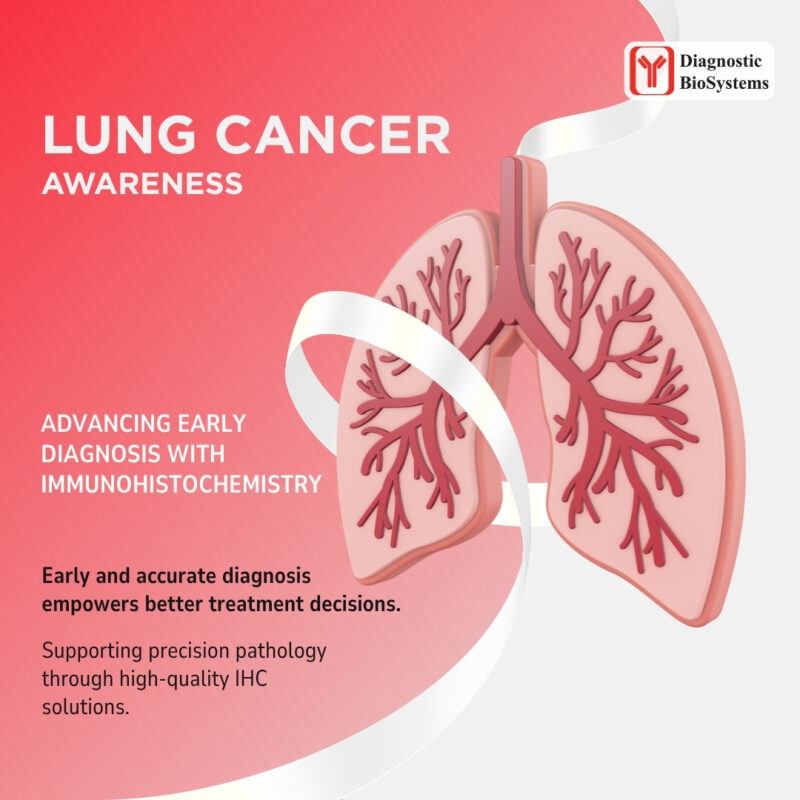
Lung Cancer Awareness Month 2026
Aug
Lung Cancer Awareness Day
Empowering Early Detection Through Precision IHC Diagnostics
Lung cancer remains the world’s most commonly diagnosed cancer and the leading cause of cancer-related deaths. Globally, nearly 2.5 million new cases and more than 1.8 million deaths were reported in 2022, highlighting the urgent need for early detection and accurate diagnosis.
Lung cancer is broadly classified into two main types:
- Non-Small Cell Lung Cancer (NSCLC) accounts for 80–85% of all cases and includes adenocarcinoma, squamous cell carcinoma, and large cell carcinoma. Accurate differentiation between these subtypes is essential for selecting the most effective treatment.
- Small Cell Lung Cancer (SCLC) represents 10–15% of cases and is known for its aggressive nature and rapid progression.
Accurate pathological evaluation is the foundation of effective lung cancer diagnosis and treatment. Immunohistochemistry (IHC) plays a critical role in identifying tumor type, supporting precise classification, and guiding personalized therapeutic decisions.
At Diagnostic BioSystems, we are committed to advancing early and accurate lung cancer diagnosis through our high-quality IHC reagents and diagnostic solutions. On Lung Cancer Awareness Day, we stand with pathologists, researchers, healthcare professionals, patients, and caregivers in the fight against lung cancer—raising awareness, supporting early detection, and improving patient outcomes.
Explore Diagnostic BioSystems high quality Lung panel markers
Thyroid Transcription Factor-1 (TTF-1): Helps to differentiate primary lung adenocarcinoma from other metastatic cancers.
Web Link: https://bit.ly/40Hf7o7
Napsin A: Aids in identifying lung adenocarcinoma
Web Link: https://bit.ly/DBS-Napsin_A
Cytokeratin 5/6 (CK5/6), p40, and p63: Detect lung squamous cell carcinoma and help to differentiate lung squamous cell carcinoma from adenocarcinoma.
Web Links:
Cytokeratin 5/6: https://bit.ly/3O6gDIH
ALK and ROS1: Identifies specific genetic rearrangements that can be targeted with tyrosine kinase inhibitors. ALK and ROS1 positive cases often benefit from targeted therapies, providing a better prognosis for patients with these mutations.
Web Links:
ROS1: https://bit.ly/3YP0cW9
For more information, please visit us at https://dbiosys.com/